
Mutual Empowerment: The Development of Psychology in the Context of Artificial Intelligence
On December 31, 2025, the warm and lively thematic exchange on "The Future Development and Blueprint of Psychology in the Context of Artificial Intelligence" delivered by Professor Wang Yiwen, a national-level talent and second-level professor of Fuzhou University, was held in Conference Room A567 of the Humanities Building of Nanchang University. Teachers and postgraduate students of the Department of Psychology gathered on the spot to jointly explore the development path of intelligent psychology in the collision of interdisciplinary thinking.
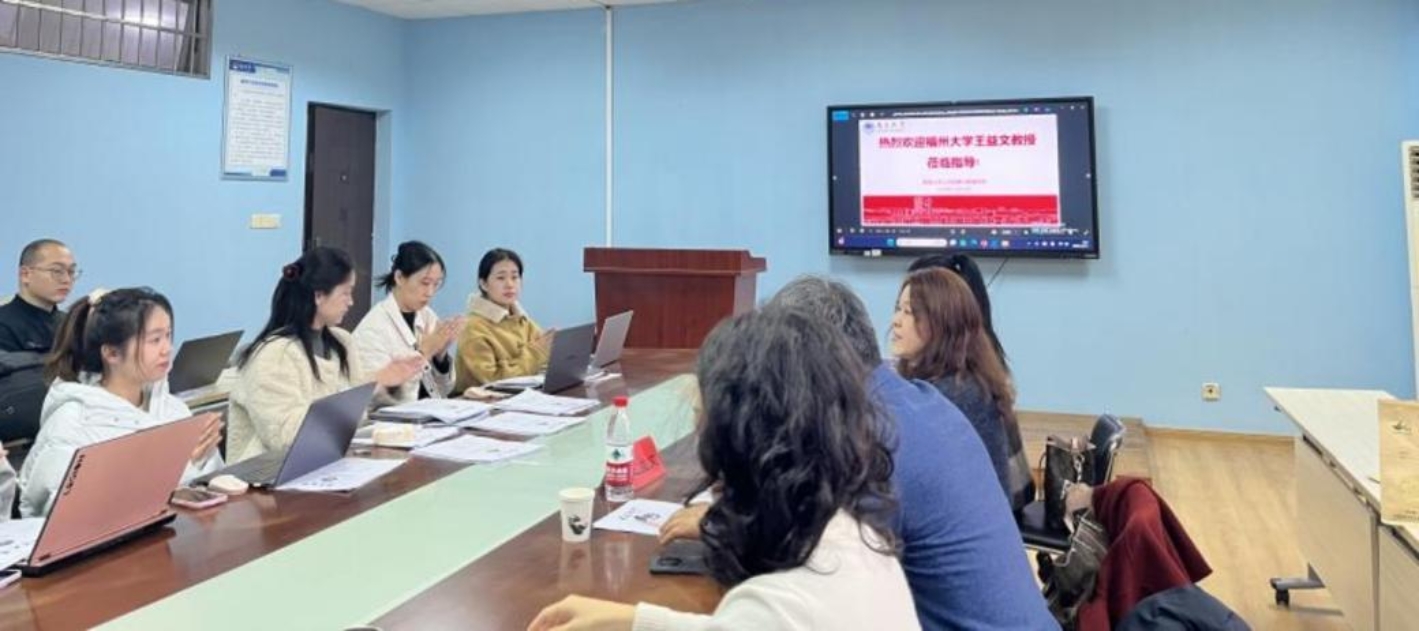
"The integration of artificial intelligence and psychology is not a simple technological superposition, but a profound paradigm revolution." Professor Wang Yiwen pointed out the core viewpoint at the beginning. As a distinguished researcher of the Institute of Information Science and Technology of Peking University and Chief Expert of Major Projects of the National Social Science Foundation, he has been engaged in the interdisciplinary field of "AI + Psychology" for 30 years, published dozens of theses in top journals at home and abroad, and won national and provincial excellent achievement awards for many times.
In the exchange, Professor Wang systematically explained the disciplinary development logic of "mutual empowerment". AI technology is breaking through the boundaries of traditional psychological research - machine learning modeling realizes the accurate prediction of psychological states, deep learning reconstructs the paradigm of psychological assessment, and virtual reality technology creates immersive intervention scenarios; and psychology's profound understanding of human cognitive mechanisms also injects the ability of "emotional resonance" into AI, promoting the breakthrough of large language models in the field of emotion recognition. Taking his team's research as an example, he said: "The ecological psychological assessment model we constructed by analyzing multi modal data such as text, voice and gait has an accuracy rate of more than 80% higher than that of traditional scales."
In response to the Implementation Opinions on Promoting and Regulating the Application and Development of "Artificial Intelligence + Medical and Health Care" issued by five ministries and commissions including the National Health Commission in 2025, Professor Wang specially pointed out the policy opportunities: "The construction goal of vertical large models for specific diseases and specialties by 2027 provides a clear path for the deep integration of psychology and AI."
"The core competitiveness of interdisciplinary disciplines lies in talents." When talking about disciplinary construction, Professor Wang Yiwen combined his experience in joint talent training with top 50 universities in the world and called on universities to establish an integrated training system of "artificial intelligence + psychology". He emphasized that "students should be made to understand both experimental design and psychological measurement, and master data modeling and algorithm logic, becoming bridge builders of interdisciplinary innovation."
Teachers and students on the spot conducted in-depth exchanges on "how to maintain the humanistic temperature of psychology in the AI era". "Technology is a tool rather than a goal. Just as AI can accurately mark the risk of depression, real healing always requires human empathy and care." Ethical risk prevention and control has become another focus of the exchange. Professor Wang reminded teachers and students to pay attention to three challenges: data privacy protection, assessment bias caused by algorithmic prejudice, and the boundary of human emotional dependence on AI. He suggested establishing an interdisciplinary ethical review mechanism and embedding psychological ethical norms in the early stage of technological research and development to ensure that AI always serves the mental health and well-being of people.
In the interactive session, the questions of teachers and students focused on practical application and scientific research innovation. In response to the question of "how to implement AI technology in grassroots psychological services", Professor Wang shared the research and development experience of the remote intelligent psychological assessment system, that is, dynamically matching assessment scales through adaptive recommendation algorithms, which can greatly improve screening efficiency and is especially suitable for grassroots scenarios with scarce resources.
Li Li, Director of the Department of Psychology of Nanchang University, said in the summary: "Professor Wang's sharing has both theoretical height and practical depth, pointing out the direction for us to connect with national strategic needs and promote the transformation and development of psychology."