
The School of Public Policy and Administration Convened a Meeting on the Deployment of Key Teaching Tasks for 2026 and Technical Training
To promote the distinctive and high-quality development of undergraduate education and to clarify the School’s key teaching priorities for 2026, the School of Public Policy and Administration at Nanchang University held a meeting on the deployment of major teaching initiatives and technical training on the morning of January 22, 2026, in Conference Room A309 of the Wenfa Building. The meeting also aimed to strengthen the integration of artificial intelligence technologies into disciplinary transformation and teaching innovation, and to enhance the School’s capacity for producing high-impact teaching outcomes. Department heads and deputy heads from the School’s five departments, directors of seven undergraduate programs, leaders of teaching teams, heads of teaching and research sections, and faculty representatives attended the meeting. Centered on digital teaching innovation, participants exchanged ideas and discussed practical pathways to improving teaching quality and effectiveness.
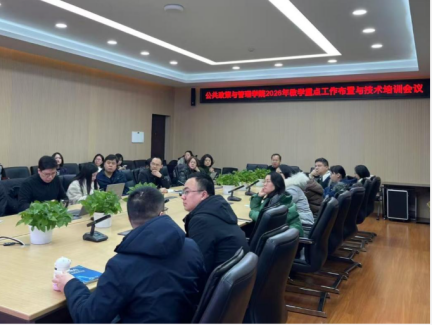
At the beginning of the meeting, Yu Dengke, Associate Dean in charge of undergraduate teaching, briefly outlined the School’s overall requirements for undergraduate education in 2026. He emphasized digital transformation as a key breakthrough and called on each program to proactively adapt to evolving policy and technological trends, advance reform initiatives, and promote the integration of artificial intelligence into teaching practices.
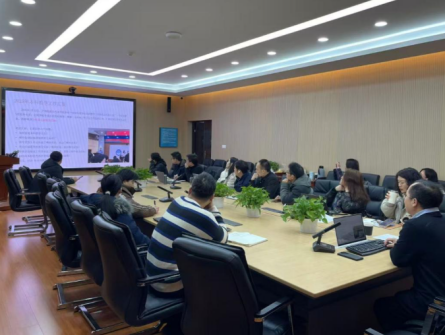
During the meeting, Ye Sanli, a technical specialist from Chaoxing Company, delivered a presentation and training session on the development of virtual teaching and research offices. Drawing on relevant policies issued by the Ministry of Education and official notices on pilot initiatives, she provided an in-depth interpretation of the core value of virtual teaching and research platforms in promoting cross-institutional collaboration and resource sharing. She also shared well-established practices and successful cases from universities such as Xiamen University and Xidian University, and introduced the platform’s key operational functions, including co-development and sharing of teaching resources, knowledge graph construction, and the coordinated organization of both online and offline teaching and research activities, offering clear practical guidance for faculty members.
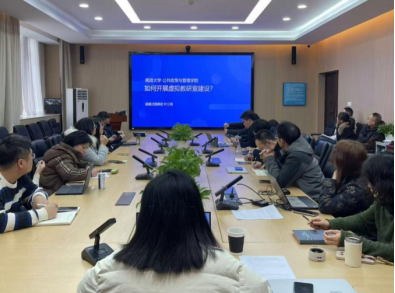
Subsequently, Peng Feiya, a technical specialist from Huachang Company, conducted a training session focusing on the development of digital textbooks and smart courses. She introduced the guiding principles for compiling digital textbooks, emphasizing value-oriented content and the integration of diverse resources such as videos, 3D animations, and mind maps. She also explained the organizational frameworks and structural features tailored to three disciplinary categories—science, engineering, and the humanities and social sciences—and presented successful cases of digital textbook development across different fields. In addition, Peng elaborated on the core concept of “AI + HI”(Artificial Intelligence + Human Intelligence and creativity) in smart course design. Through live demonstrations, she showcased AI applications throughout the teaching process, including lesson preparation support, assignment grading, and scenario-based simulations, enabling faculty members to quickly grasp effective approaches to technology integration.
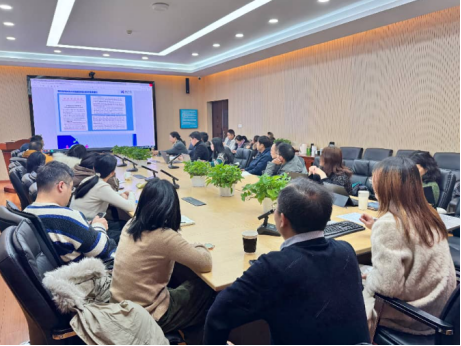
By integrating policy interpretation with hands-on training, the meeting clarified the key priorities for the School’s annual teaching agenda and provided strong technical support for future initiatives. Participating faculty members noted that the training was highly targeted, practical, and efficient. They expressed their commitment to further integrating digital technologies with their teaching practices and to actively exploring innovative pathways for deep technology–pedagogy integration, thereby injecting new momentum into the high-quality development of undergraduate education at the School.