
Yao Liansheng
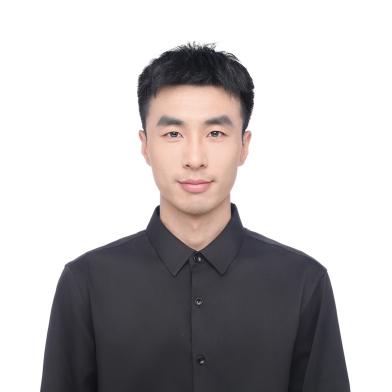
Name: Yao Liansheng
Professional title: Assistant Professor
E-mail: yaols@ncu.edu.cn
Main Research Areas and Directions
• Visual Perception and Consciousness
• Interpretability of Neural Networks
• Multi-channel Information Integration and Transfer
• Micro-expression Recognition
Major Academic Achievements
•Journal Articles
Yao, L., Fu, Q., Liu, C. H., Wang, J., & Yi, Z. (2025). Distinguishing the roles of edge, color, and other surface information in basic and superordinate scene representation. NeuroImage, 121100.
Feng, T.*, Yao, L.*, Shen, X., Zhang, Y., & Fu, Q. (2025). Form information modulates the temporal dynamics of walking direction and body orientation processing in biological motion perception. Cerebral Cortex, 35(8).
Shang, J., Zhong, K., Hou, X., Yao, L., Shi, R., & Wang, Z.-j. (2025). Invisible and Visible Processing of Facial Attractiveness in Implicit Tasks: Evidence From Event-Related Potentials (ERPs). PsyCh Journal.
Sun, Y., Yao, L. S., & Fu, Q. F. (2024). Crossmodal Correspondence Mediates Crossmodal Transfer from Visual to Auditory Stimuli in Category Learning. Journal of Intelligence, 12(9), Article 80.
Yao, L., Fu, Q., & Liu, C. H. (2023). The roles of edge-based and surface-based information in the dynamic neural representation of objects. NeuroImage, 283, 120425.
Sun, X., Yao, L., Fu, Q., & Fu, X. (2023). Multisensory transfer effects in implicit and explicit category learning. Psychological Research, 87(5), 1353-1369.
Yao, L., Xiao, X., Cao, R., Chen, F., & Chen, T. (2020, March). Three stream 3D CNN with SE block for micro-expression recognition. In 2020 International Conference on Computer Engineering and Application (ICCEA) (pp. 439-443).
Chen, J., Zhang, Z., Yao, L., Li, B., & Chen, T. (2019, August). Face recognition using depth images base convolutional neural network. In 2019 International Conference on Computer, Information and Telecommunication Systems (CITS) (pp. 1-4).
Shan, Y., Chen, T., Yao, L., Wu, Z., Wen, W., & Liu, G. (2018, May). Remote detection and Classification of human stress using a depth sensing technique. In 2018 first asian conference on affective computing and intelligent interaction (acii asia) (pp. 1-6).